
The phone rang. I knew it was him before I even picked it up. My stomach lurched, a familiar, acidic twist that tasted of betrayal and two decades of unspoken rage. It had been fifteen years since I’d last heard his voice, fifteen years since I swore I never would again.”It’s me,” he rasped, and the sound alone was a physical blow. Weak, frail, utterly unlike the booming, dismissive voice that haunted my nightmares. What could he possibly want? The question burned, a silent accusation in the quiet space of my home.He wanted help. Of course, he did. He was sick. Alone. And he had nowhere else to go.
The memories hit me like a train, a blinding flash of relentless rain and biting cold. I was 20 years old, soaked to the bone, clutching a newborn to my chest, its tiny cries a mournful counterpoint to the storm. My own tears mingled with the raindrops on my face as I stood on his doorstep. Hope, a fragile, foolish thing, still flickered. He was my father. He had to help.
He opened the door just enough to see me, to take in the pathetic sight of his only child, shivering, destitute, with a baby swaddled in a threadbare blanket. His eyes, usually so sharp and piercing, were cold, distant. Unreadable.
“I can’t help you,” he said, his voice flat, devoid of warmth or empathy. “You made your bed. Lie in it.”

A woman deep in thought | Source: Pexels
“You made your bed. Lie in it.”
The words echoed in my head, then and now, a brutal mantra. They weren’t just words; they were a hammer blow to my soul, shattering the last fragments of my innocence, my belief in family, in love. The door closed, slowly, deliberately, a final, definitive period on any hope I’d ever held for a connection with him.
I stood there for a long time, the rain plastering my hair to my face, the baby’s whimpers turning into a hungry wail. My world had just shrunk to the size of a single, locked door. I had no money, no home, no job, and now, no family. Just a tiny, fragile life completely dependent on me. What kind of monster does that to their own flesh and blood?
The next few years were a blur of unimaginable hardship. Sleeping in a beat-up car, scrounging for food, working two, sometimes three minimum-wage jobs while my baby slept in a borrowed crib in the corner of some kind stranger’s apartment. Every single day was a battle for survival, fueled by a ferocious love for my child and an equally ferocious hatred for the man who had abandoned us.

A woman using her phone while lying on a bed | Source: Pexels
I swore then that I would make it. I would succeed. Not for him, but despite him. I would build a life so strong, so secure, that I would never, ever need him. And I would never forgive him.
And I did. I worked my fingers to the bone, got a GED, then an online degree. I started a small business that grew, slowly at first, then rapidly. My child flourished, a beautiful, intelligent, compassionate soul who knew nothing of the desperate struggle that marked their early years. We lived in a beautiful home, lacked nothing, and were fiercely independent. I had created a sanctuary, a world where we were safe, loved, and whole.
But the scar remained. A burning resentment, a cold, hard knot in my chest that tightened whenever I thought of him.
Now, he was calling. Begging.

An open kitchen drawer | Source: Pexels
My first impulse was to hang up. To tell him to reap what he had sown. To laugh, coldly, into the receiver and say “You made your bed. Lie in it.” But I couldn’t. I just stood there, listening to his plea, his voice cracking, the faint sounds of a hospital in the background.
He’s dying, a small voice whispered. He’s still your father.
My child, now a thoughtful teenager, watched me, their brow furrowed with concern. “Who was that, Mom?” they asked, their innocent curiosity a stark contrast to the storm raging inside me. I couldn’t explain it all. Not yet. Not the depth of the pain, the bitterness.
I took a deep breath. I am not him, I told myself. I am better than him. I would help him. Not out of love, not out of forgiveness, but out of a cold sense of obligation, and perhaps, a desire to prove to myself, to my child, that I was capable of compassion even for the undeserving. I would do it for the closure, to finally put this ghost to rest.
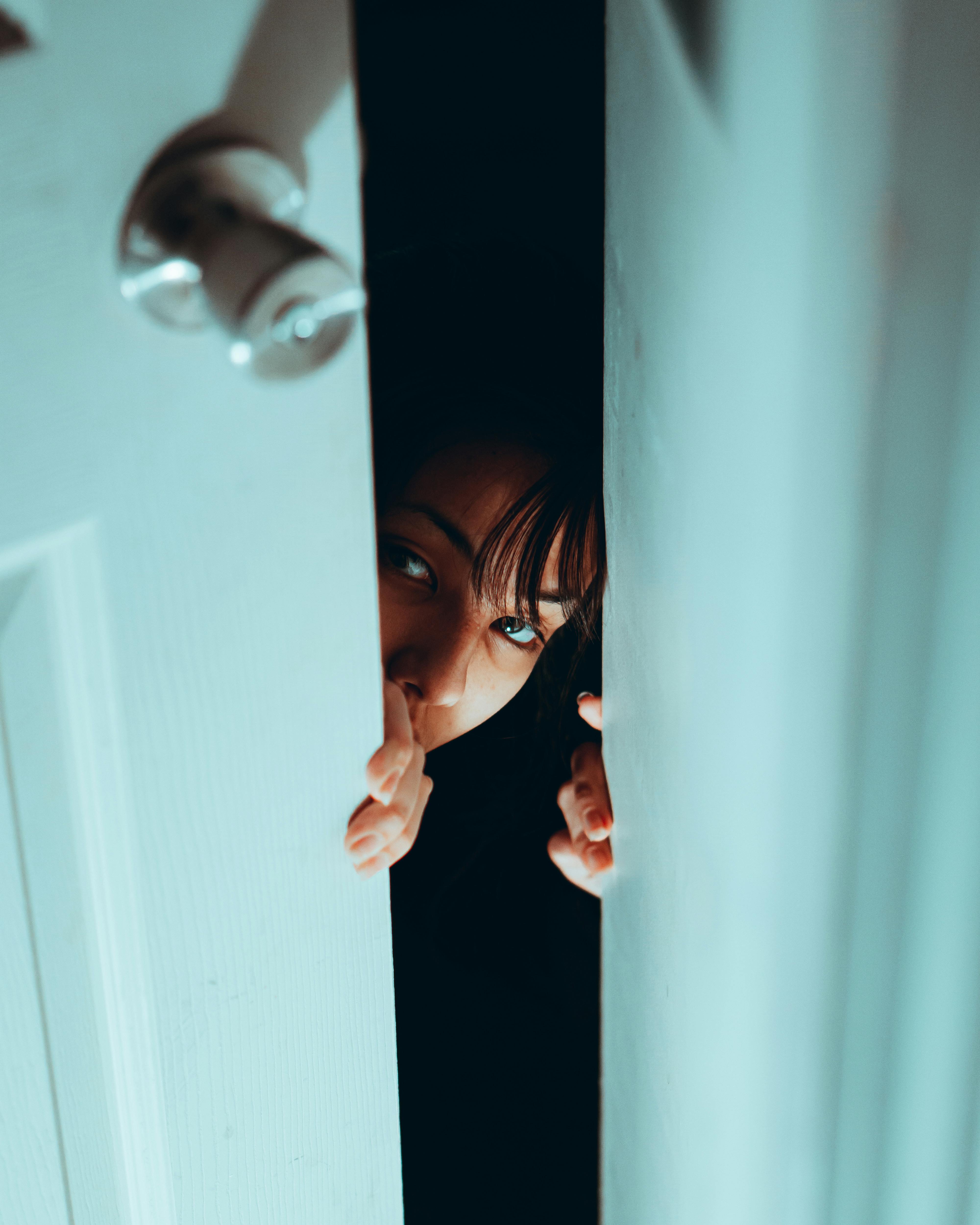
A woman peeking in through an open door | Source: Pexels
He arrived a week later, a shadow of the man I remembered. Frail, gaunt, leaning heavily on a cane. He flinched when he saw me, as if expecting a blow. I didn’t offer one. Just a room, food, and the bare minimum of care. He spent his days sitting by the window, staring out at the garden, a picture of silent despair.
Then, one afternoon, he called me into his room. His voice was barely a whisper. “I need to tell you something,” he began, his eyes cloudy with tears. “About that day. About your mother.”
My mother. She had left when I was very young, a vague, idealized memory of a beautiful, fleeting presence. He had always said she just… vanished. Moved on.
“She didn’t just leave,” he choked out, struggling for breath. “She was… dangerous. Manipulative. She had powerful connections, people who would do anything for her.”
He paused, a racking cough shaking his thin frame. “When you came to me that day… I had just received a message from her. A threat.”
A partial view of a serious woman’s face | Source: Pexels
My heart hammered against my ribs. What kind of threat?
“She told me if I helped you, if I let you into my home, she would make sure you lost your baby.”
My breath caught in my throat. I couldn’t speak. I just stared, my mind reeling.
“She had leverage over me,” he continued, tears now streaming down his face. “Something terrible, something I’d done in my youth that would have ruined me, taken everything. But that wasn’t it. She knew my biggest fear was losing you, or you losing your child. She said she had friends in high places, friends who could make sure your parental rights were revoked, that your baby would be taken away.”
He gripped my arm, his fingers surprisingly strong. “She said if I turned you away, if I showed her I was cutting ties, she would leave you alone. She promised she wouldn’t interfere. She hated me, and she wanted to punish me by making me hurt you, but she said she wouldn’t hurt you directly if I complied.”
A silhouette of a man rubbing his shoulder | Source: Pexels
He stared at me, his eyes pleading for understanding. “I believed her. I believed she would do it. I thought… I thought it was the only way to protect you. To protect my grandchild.”
He closed his eyes. “I watched you walk away. It broke me. Every single day, for fifteen years, I watched you. From a distance. I sent anonymous help, through channels she couldn’t trace. Food vouchers, small amounts of cash, always making sure it looked like a charity, never from me. I was always there, just out of sight, making sure you were safe.”
“Your mother died six months ago.” he finished, his voice barely audible. “She died, and I knew it was safe. Safe enough to finally contact you. To finally explain why I abandoned you. Why I broke my own heart to save yours.”
The room spun. My carefully constructed life, built on a foundation of his betrayal, had just been ripped out from under me. The monster wasn’t him. It was her. My mother. The woman I had idealized, the missing piece of my puzzle, was actually the architect of my deepest pain.

A stressed man | Source: Pexels
My father, the man I had hated for fifteen years, was a desperate, broken man who had sacrificed his own peace, his own reputation, his own relationship with me, to save his grandchild. He hadn’t turned me away out of callousness. He had turned me away out of the most agonizing, profound love imaginable.
The rage drained out of me, replaced by an overwhelming, suffocating wave of grief. For the lost years. For the misunderstanding. For the beautiful, loving relationship we could have had, had it not been for the twisted cruelty of another. And for him, for the unbearable burden he had carried alone, in silence, for so long.
I looked at him, truly looked at him, and saw not the villain of my past, but a broken man who had suffered just as much, if not more, than I had. And in that moment, the hatred shattered, replaced by a devastating, gut-wrenching realization: I hadn’t just lost a father that day. I had lost the truth of our story, and for fifteen years, I had hated a hero.
