
I still wake up in a cold sweat sometimes, the memory so vivid it could be yesterday. It’s a confession I’ve held inside, clawing at my throat, suffocating me with guilt. I have to say it, finally. I let my son go live with his dad—and then I realized he needed saving.It was almost three years ago. My life was a whirlwind. Two jobs, barely making ends meet, and my little boy, just six, was… well, he was a lot. Energetic, boisterous, demanding every ounce of my attention, which I barely had to give. I was constantly stressed, perpetually exhausted, snapping at him for little things.
His dad, my ex, lived an hour away. Quiet. Stable, I thought. He had a decent job, a small house with a yard. He offered to take him, “just for a bit,” he said. “Let him settle, get some peace.” I remember the relief, sharp and sudden, that washed over me. It’s for his own good, I told myself. He needs a calmer environment, better focus. I packed his small suitcase, choking back tears that felt more like shame than sadness.

A man in an office | Source: Pexels
The first few weeks were… simpler. Too simple. My apartment was quiet. I slept. I worked. I had moments of peace. Then the calls started to change. At first, he was excited, telling me about the yard, about new toys. But slowly, subtly, his voice flattened. “Everything’s fine,” he’d say, a little too quickly. He stopped asking about my day. He’d find excuses to get off the phone. “Dad says I have to go.” He’s just adjusting, I’d rationalize. Boys are like that.
But the unease grew. On video calls, he looked thinner, his eyes a little vacant. He always wore long sleeves, even indoors. When I suggested visiting, his dad was suddenly swamped with work, or my son had “plans.” “He’s making new friends,” his dad would say, his voice smooth and dismissive. But my son never mentioned these friends. He just sounded… subdued. My gut twisted. Something felt profoundly wrong.

A man adjusting his jacket | Source: Pexels
I tried talking to his dad, gently at first. “Is everything okay? He seems a bit quiet.” His dad laughed. “He’s just growing up. Less chaos here, he’s learning to appreciate it.” Less chaos. That phrase stuck in my head like a barb. My life was chaotic, yes, but it was also full of laughter, noise, love. His dad’s life had always been… sparse. Isolated.
The nightmares started. Vivid, terrifying flashes of him alone, crying. I’d wake up, heart hammering, drenched in sweat. I’d call, but he wouldn’t answer, or his dad would pick up, irritated. “He’s asleep. Don’t call so late.” It wasn’t late. It was 8 PM. My panic morphed into a cold, hard resolve. I HAD TO SEE HIM.
I drove the hour, unannounced. My hands were shaking so badly I almost missed the exit. The house looked the same from the outside, neat but unremarkable. The quiet, though. It was the first thing that hit me. An oppressive, suffocating quiet. I knocked, then knocked again. No answer. I peered through a window. The living room was almost bare. An empty space where a child’s vibrant energy should have been. My heart hammered against my ribs. WHERE WAS HE?

A nervous woman | Source: Pexels
I found him in the backyard, tucked into a corner, meticulously lining up pebbles. He startled when he saw me, his small body tensing. His eyes, when they met mine, were wide with fear, then a flicker of something that looked like immense relief. “Mom?” he whispered, as if he wasn’t sure I was real. I knelt, my arms wrapping around him, pulling him close. He felt so small, so bony. His hair was greasy. He flinched when I squeezed him.
I pulled back, my hands gently cupping his face. That’s when I saw it. A faint bruise blooming on his cheekbone, almost hidden by his hair. And as he lifted his arm to point at a particularly shiny pebble, his sleeve rode up. A long, dark line of purple and yellow snaked up his forearm. I traced it with a trembling finger. “What happened?” I whispered, my voice barely there.

An envelope | Source: Pexels
He looked around, then leaned in close, his voice a barely audible tremor. “He just… makes me stay quiet. And if I don’t… he gets mad. He says I make too much noise, just like you.” He looked at me, his eyes pleading. “He locks me in my room if I don’t.” My breath caught in my throat. My vision blurred. IT WAS ALL TRUE. EVERYTHING MY GUT HAD SCREAMED.
I didn’t say another word. I just stood up, pulled him to his feet, and led him to my car. I didn’t care about his dad, about legalities, about anything but getting him out. I drove away, his small hand clutched in mine, his head resting against my side, not speaking, just breathing. He was safe. I had saved him.
Or so I told myself for weeks, for months, as I nursed him back to health, mind and body. As I watched the color return to his cheeks, the sparkle to his eyes. As his laughter, once a painful ghost, filled my apartment again. He healed. I watched him bloom.
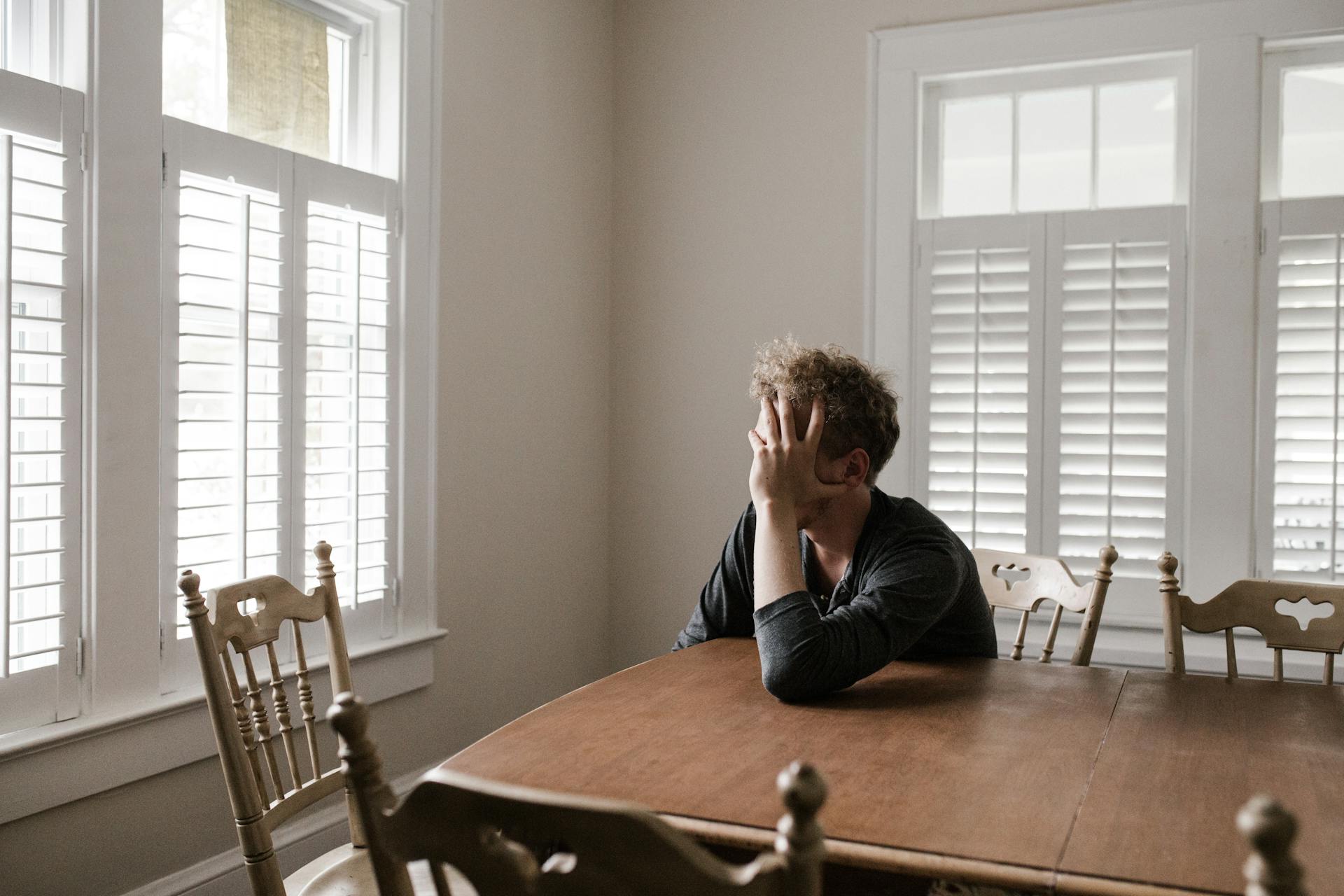
A depressed man seated at a table | Source: Pexels
But the real healing had to start with me. Because the twist, the horrifying truth that hit me like a physical blow, wasn’t about his dad. It was about me. I had known his dad. I had lived with his dad. I knew he was quiet, yes, but I also knew he was emotionally distant. A loner. He saw a child’s boisterous joy not as vitality, but as an intrusion, a disturbance to his carefully constructed peace. He struggled with connection, with empathy. I KNEW THIS ABOUT HIM. I had experienced it myself.
But my life was hard. I was tired. I was overwhelmed. And when he offered to take our son, I didn’t see a potential threat; I saw a solution to my problems. I convinced myself that his quietness was “calm,” his detachment was “stability,” his solitary nature was “peace.” I ignored the insidious truth that his “peace” came at the cost of genuine human connection, the very thing my son needed to thrive.

A briefcase loaded with money | Source: Pexels
I let my son go live with his dad, not because it was best for him, but because it was convenient for me. I rationalized his dad’s known flaws, turning them into virtues in my exhausted mind, because I desperately needed a break. I sent my vibrant, noisy, loving child into a quiet, emotionally barren prison, and then acted surprised when he withered. I didn’t just realize he needed saving; I realized that I had knowingly, willfully, and selfishly put him in harm’s way in the first place. And that, more than anything, is my unforgivable sin.
