 “Doctor, save my husband!” a woman screamed as they rushed him into the hospital.I ran toward the emergency entrance with the on call team, repeating every protocol from memory until my eyes landed on the man lying on the stretcher.I froze when I recognized his face, because the unconscious patient struggling to breathe was Christopher Hayes, the man I had been married to for eleven years.His hand was tightly intertwined with that of a pregnant woman who was crying uncontrollably and refusing to let go of him, as if her entire world depended on that contact.

A bedroom with a laptop | Source: Pexels
She did not know I existed, and in that single moment everything became clear without anyone needing to explain it to me.
I swallowed hard, pulled on my gloves, and forced myself back into my role as a physician because the emergency room was not only about saving a life, but also about revealing a truth that could no longer be hidden.
“Cardiac monitor, establish IV access, prepare blood gas analysis immediately,” I said firmly while stepping into position beside the stretcher.
The electrocardiogram showed a dangerous ventricular arrhythmia, and I immediately ordered defibrillation as the team prepared the equipment without hesitation.
When his body arched under the shock, the pregnant woman whispered his name softly as if I were invisible, and her voice carried a familiarity that made my chest tighten.
“I’m Madison Blake, his wife,” she said through tears when a resident tried to guide her away from the procedure area.
My stomach twisted, because I had believed for over a decade that I was his only wife.
After two shocks, we restored a stable rhythm, and we quickly intubated him before transferring him to the intensive care unit for closer monitoring.
In the hallway, Madison looked at me with desperate eyes, searching for reassurance while holding her belly protectively as if she feared losing everything at once.
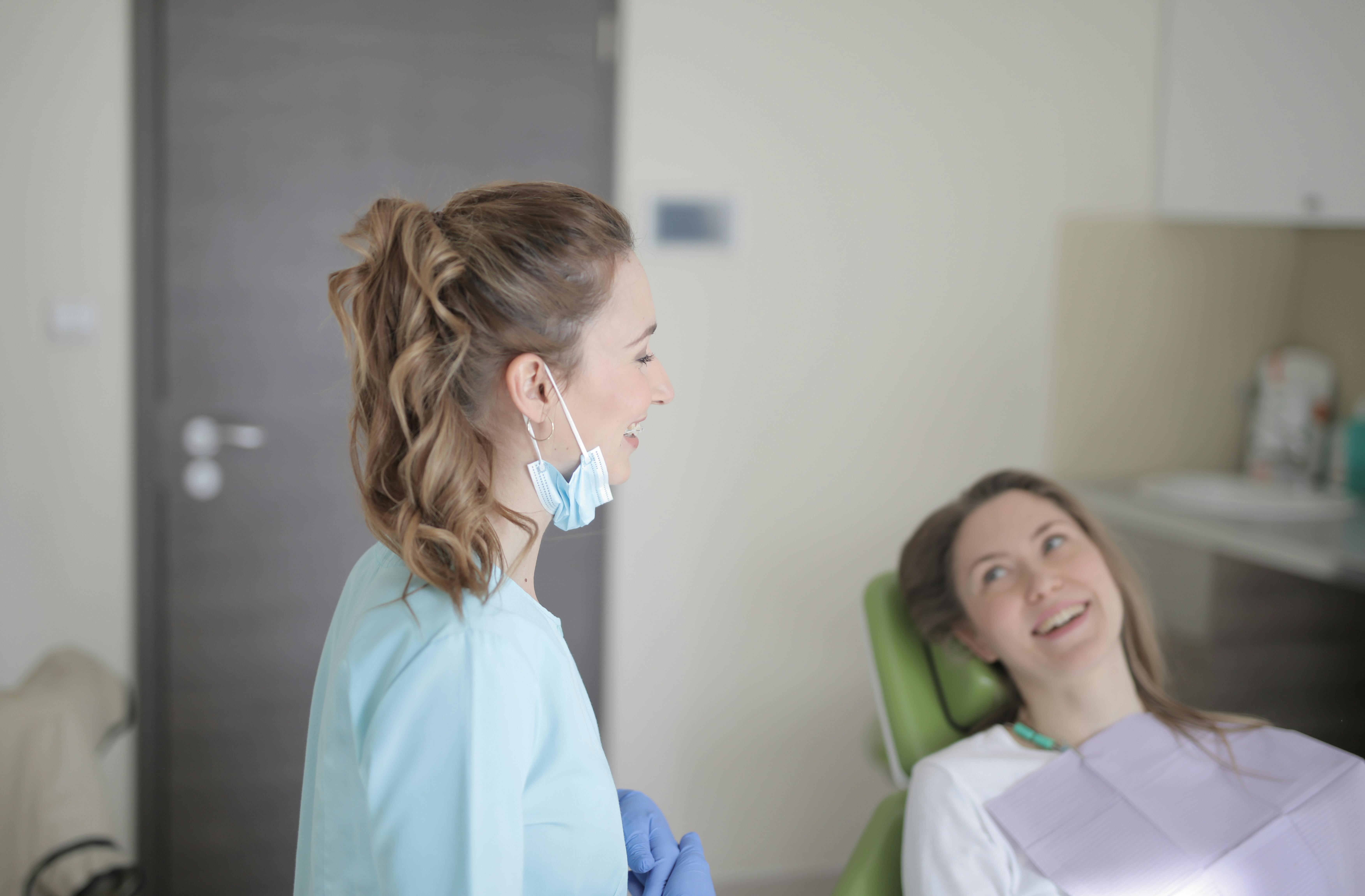
A doctor with a patient | Source: Pexels
“He is stable but still critical,” I told her carefully, choosing each word with precision to avoid revealing anything I was not ready to face.
Without thinking, I asked, “How far along are you,” and she answered quietly, “Thirty weeks,” while instinctively placing her hand over her abdomen.
Thirty weeks of a life I had never known about, thirty weeks of deception that had existed alongside my own reality without my awareness.
When she signed the consent forms, I noticed the ring on her finger, and my breath caught when I saw it was identical to mine with the same engraved date.
The world seemed to tilt under my feet as everything I believed about my marriage collapsed at once.
I called my supervisor, Dr. Evelyn Harper, and informed her that I needed to step away from the case due to a personal conflict of interest that I could not ignore.
She studied my face for a long moment before nodding and saying quietly, “Go home and rest,” though she clearly understood there was more beneath my words.
I could not leave, so I remained seated outside the intensive care unit, counting the steady rhythm of machines and footsteps so I would not have to face the truth inside my own mind.
At three in the morning, the cardiologist came out and informed us, “He suffered a massive heart attack, and the prognosis remains uncertain,” which only deepened the tension already hanging in the air.
A portable video camera | Source: Pexels
Madison reached for me instinctively, and I allowed her to hold my hand even though neither of us fully understood the connection that bound us together at that moment.
We were two women connected by the same man, standing on the edge of a reality neither of us had chosen, trying to hold ourselves together without breaking completely.
Outside, Chicago continued its endless movement, but inside that hospital corridor my life had come to a complete stop.
Christopher regained consciousness just before dawn, still sedated but aware enough to respond to voices around him.
I stayed outside the room, forcing myself to enter as a doctor rather than as a wife, though I no longer knew which identity truly belonged to me.
Madison was already at his side when he opened his eyes, and he greeted her with a soft “Hey, love,” before pressing a weak kiss to her forehead.
Then his gaze shifted and met mine through the glass, and the heart monitor began to accelerate as tension filled the room instantly.
The nurse instructed him to remain calm, but he lifted his hand slightly as if trying to reach both of us at once, unable to reconcile the two realities he had created.
Hours later, after he stabilized further, I asked Madison if we could speak privately, and we moved to a small room with a worn table and a humming coffee machine in the corner.
I told her who I was without raising my voice, and I held up my wedding ring as proof of everything I had believed for years.

A frustrated woman sitting on the bed | Source: Pexels
She slowly removed her own ring and stared at it before speaking, saying, “He married me three years ago and told me he was a widower,” with a voice that carried both confusion and pain.
I let out a short, bitter laugh and replied, “He told me he was traveling constantly for work,” as the pieces of our shared reality began to fall into place.
Christopher had worked as a project engineer with contracts between Chicago and Dallas, allowing him to maintain two homes, two schedules, and two completely separate lives.
Neither of us had suspected enough to uncover the truth earlier, and for a brief moment guilt touched both of us before fading because it did not belong to us.
We believed we were simply two women deceived by the same man, until he woke fully and destroyed that illusion with a single sentence.
“They do not know everything,” he said quietly, and something in his tone made me realize the truth was far worse than we imagined.
Christopher opened his eyes slowly and looked at both of us before speaking again with a calmness that felt colder than any anger.
“She is not the only one who is pregnant,” he said, and the silence that followed took a few seconds to settle over us as we tried to understand his words.
Madison frowned in confusion and asked, “What are you saying,” while I felt a growing sense of dread I could not ignore.
He took a slow breath and continued, “Four months ago, another woman is also carrying my child,” and this time there was no misunderstanding.
The pain that followed was different from betrayal, because it felt calculated and systematic rather than emotional or impulsive.
Neither of us raised our voices or caused a scene, because the magnitude of the lie forced our bodies into silence instead of reaction.
“They do not know everything,” he repeated before closing his eyes again, and for the first time I believed he was telling the truth.
I asked him to explain everything clearly, not with anger but with a clarity I did not know I possessed, and Madison stood beside me with the same determination.
He began to speak in fragments, revealing enough to show that his travels were not work obligations, his absences were not accidents, and his excuses were part of a carefully maintained system.
At that moment, Ethan Blake entered the room carrying a folder, his expression heavy as if he already understood what he was about to reveal.
“I think you both need to see this,” he said while placing documents on the table one by one, each page adding another layer to the truth.
There were loans under both marriages, duplicate insurance policies, and signatures that I recognized alongside others I did not remember signing.
Madison found her own documents among them, and we exchanged a look that carried a realization deeper than infidelity.
Christopher had not only lied to us, he had used us legally and financially as if we were interchangeable parts of a system he controlled.
Dr. Evelyn Harper recommended a legal specialist, and I contacted Rebecca Collins that same afternoon while Madison agreed to accompany me without hesitation.
There was no argument between us, because pride no longer mattered in the face of what we had discovered.
At the law office, Rebecca explained that Madison’s marriage was legally invalid while mine remained technically valid, though both situations would have consequences.
She clarified that all children would have legal rights and that debts would also be shared responsibilities, meaning nothing could simply disappear.
That night, we returned to the hospital because Christopher’s condition suddenly worsened due to pulmonary complications that placed him back in critical danger.
While the medical team worked intensely, Madison reached for my hand and whispered, “If he survives this, I never want to see him again,” with a quiet exhaustion rather than anger.
I looked at her and replied, “Neither do I,” and in that shared understanding everything ended between us and him.
When his condition stabilized again, we sat in the hallway without speaking much, because there was nothing left to say that had not already been understood.
We chose not to become enemies, because the harm had not come from either of us, and we refused to let his actions divide us further.
Chicago continued its rhythm outside, but inside I felt a permanent shift that could never be undone.
Christopher was discharged weeks later, weaker and quieter, as if he finally understood the weight of everything he had created.
We had already made our decision to cut all communication except through legal representation, with no visits and no second chances.
Madison moved in with her sister while I remained long enough to close the chapter of my life that had existed with him.
I changed the locks calmly, not out of anger but out of necessity, because restoring order required clear boundaries.
Rebecca Collins initiated the legal processes for divorce, annulment, and financial liability, and Christopher signed every document without resistance.
For the first time, he did not attempt to manipulate or persuade anyone, because the truth had removed all of his control.
The court addressed responsibilities, children, and consequences, enforcing limits that he had never respected on his own.
Madison gave birth earlier than expected and sent me a message saying, “Elliot has been born and he is healthy,” which led me to visit the hospital again.
I went not because of Christopher, but because of her and the child who had no part in any of this.
When I held the baby, I felt no anger, only a quiet sadness that did not weigh heavily but refused to disappear completely.
Months later, I returned to the emergency room, walking the same hallway with a different sense of self than before.
Dr. Evelyn Harper looked at me and nodded, understanding without needing words, while Madison and I maintained occasional contact in a simple and respectful way.
Life never returned to what it was, but it stopped being a lie, and that difference mattered more than anything I had lost.
I moved forward, changed my routines, and learned how to live without needing explanations that would never come.
Christopher fulfilled his obligations with minimal effort, eventually realizing too late that love cannot be divided without destroying everything.
One year later, another voice cried out in the emergency room, and I ran without hesitation because my role remained clear.
When the case was over, I stepped into the hallway and took a deep breath, this time without fear or confusion.
The truth had caused pain, but it had also protected the one thing I refused to lose, which was my dignity.
And in a city that never stops moving, I finally learned how to move forward without living inside a lie.
