 It was my sister’s voice that woke me.Sharp. Loud. Cutting through the hospital hallway before I could even open my eyes.For a moment I thought I was dreaming—the kind of heavy half-dream where your body feels like it’s filled with wet sand. My eyelids burned. My mouth felt like cotton. The air smelled like disinfectant and stale sheets.I blinked slowly against the harsh fluorescent lights, trying to remember where I was… and why my chest hurt so badly it felt like someone had tightened a belt around my ribs.Then the voice came closer.

An envelope | Source: Pexels
“You awake in there?” it snapped. “Emma! You better not be pretending again.”
My stomach dropped.
Vanessa.
Even before I turned my head, I knew it was her. Not just because she was my sister—but because Vanessa had always spoken like the world owed her silence. Like the louder she was, the more right she must be.
The hospital door swung open.
I flinched, and the heart monitor beside me chirped faster in response. Green lines spiked across the screen.
Vanessa walked into the room like she owned it. Her dark hair was tied back in a sleek ponytail, her heels clicking against the tile floor. She was still in her office clothes—black slacks, a pale blouse—and her badge from the real estate firm she worked for swung from her neck.
Behind her, the hallway hummed with the quiet rhythm of a hospital—rolling carts, distant voices, call buttons chiming.
But inside my room, the air turned tense.
Her eyes scanned me from head to toe.
The oxygen tube beneath my nose.
The IV in my arm.
The adhesive sensors stuck to my chest.

A man with a stern appearance | Source: Pexels
She let out a harsh laugh.
“Oh wow,” she said. “You’re really committing to the act this time.”
My throat scraped when I tried to speak.
“Vanessa… why are you here?”
“Mom called me,” she replied, stepping closer. “She was crying. Said you ‘collapsed’ again and were rushed to the ER like some tragic heroine.”
Her fingers flicked the IV tubing like it was an annoyance.
“Please… stop,” I whispered.
My chest tightened when I tried to breathe. The air wouldn’t come all the way in.
Vanessa rolled her eyes.
“There you go again.”
I tried to push myself upright, but pain flared beneath my ribs and my vision blurred.
Something cruel flickered across her face—something familiar from years of childhood arguments.
“Sit up,” she snapped. “You’ve been pretending to be sick since we were kids. It’s pathetic.”
The words hurt more than the pain.
The heart monitor beside me began beeping faster.
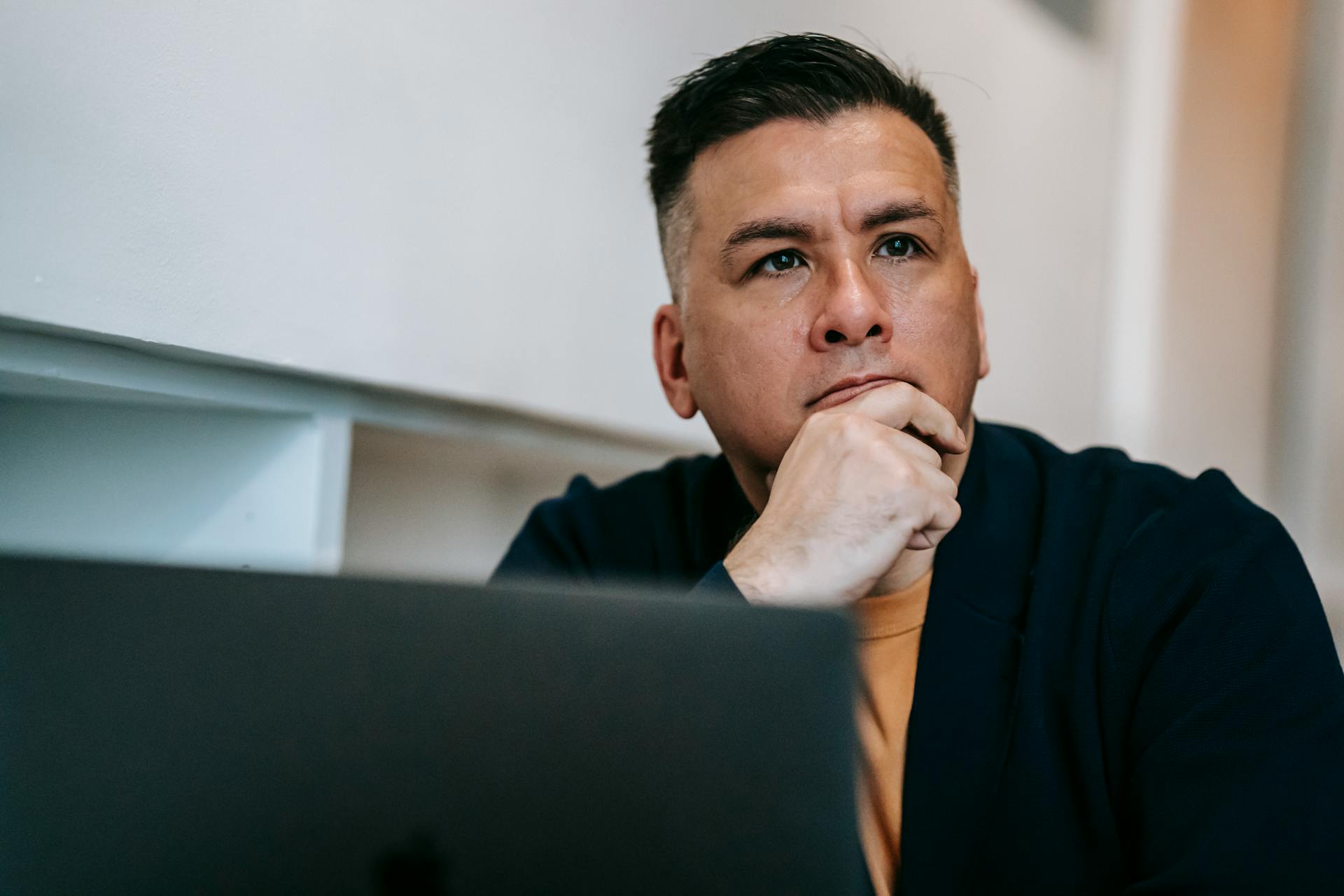
A man looking at someone | Source: Pexels
“Vanessa,” I rasped. “Please—”
But she was already reaching for the machine beside my bed.
Her hand grabbed the thick cable running from the monitor to the wall.
My eyes widened.
“Don’t—”
She yanked it free.
The cord popped out with a sharp click.
For half a second the screen froze.
Then chaos erupted.
The monitor exploded into a shrill alarm that filled the room. The green line flattened, flickered, then flattened again as the machine struggled to read my heart.
My body jolted with panic.
“See?” Vanessa scoffed. “Nothing wrong with you.”
But the alarm had already done its job.
Within seconds the door burst open.

A woman in shock | Source: Pexels
Two nurses rushed in, followed by a tall ER doctor in blue scrubs.
“What happened here?” he demanded.
One of the nurses immediately began reconnecting the monitor while the other checked my pulse.
“I unplugged it,” Vanessa said casually. “My sister likes attention. She’s been pretending to be sick for years.”
The room went silent.
The doctor slowly turned toward her.
“Ma’am,” he said evenly, “did you just admit to tampering with a patient’s cardiac monitor?”
Vanessa crossed her arms. “She’s fine. She’s just dramatic.”
The doctor didn’t argue.
Instead, he walked to the bedside computer and pressed a key.
“Actually,” he said calmly, “we anticipated this might happen.”
A recording began to play through the small speaker.
It was my voice—from earlier that morning during a test.
Weak. Struggling.
“I… can’t breathe… my chest… it hurts…”
Then the machine audio followed—the irregular rhythm of my heartbeat stuttering across the monitor.
The doctor paused the recording and looked at Vanessa.
“This was captured during a cardiac stress episode,” he explained. “Your sister isn’t pretending. She has a serious heart rhythm disorder. If that monitor had stayed disconnected much longer during another episode, we might not have caught it in time.”
Vanessa’s face drained of color.
For the first time in her life, she had nothing to say.
Security was called quietly. She was escorted out of the room, her heels echoing down the hallway.
The door closed.
The room finally felt calm again.
One of the nurses squeezed my hand gently.
“You’re safe,” she said.
I stared at the ceiling for a long moment, listening to the steady beep of the reconnected monitor.
Not the frantic chaos from before.
A steady rhythm.
Alive.
Later that evening, the same doctor came back to check on me. Before leaving, he said something that stayed with me long after the hospital lights dimmed.
“Sometimes,” he said gently, “the people who doubt us the most are the ones who never really listened in the first place.”
I realized then that the monitor hadn’t just proven my heart was struggling.
It had proven something else too.
The truth doesn’t need someone’s belief to exist.
It only needs the courage to keep beating.
