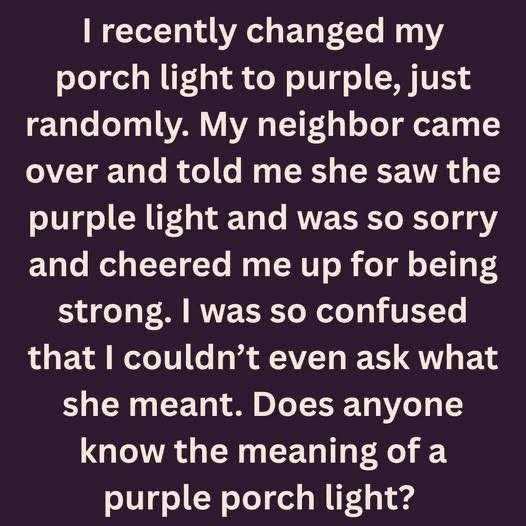
 Maybe you’ve noticed it while driving through a neighborhood at night — a soft, purple glow shining from someone’s porch. It might seem like just a decorative lighting choice at first. A nod to Halloween? A quirky bulb swap? But more often than not, that purple porch light carries a much deeper meaning.It’s not just about color. It’s about courage, survival, and a call to action.A Silent Signal That Speaks VolumesPurple porch lights have become a symbol of support for survivors of domestic violence. They’re quiet beacons that say:

Older woman arguing with her daughter-in-law | Source: Midjourney
“You are not alone. You are seen. You are supported.”In a world where victims often suffer silently — behind closed doors, behind forced smiles — the purple light breaks through the darkness, both literally and metaphorically.It tells survivors, “This is a place where you matter. Where your pain is acknowledged. And where hope still lives.”Why Purple?The color purple has long symbolized strength, dignity, and survival. It is the official color for domestic violence awareness and has been used in countless campaigns to honor victims and advocate for change.
Purple represents not just the suffering that survivors have endured, but the resilience it takes to reclaim their lives. It’s a color of bravery. A color of truth. And when it’s shining from a front porch, it becomes a public stand against abuse.Domestic Violence: A Crisis That Hides in Plain SightDomestic violence isn’t always easy to spot.It doesn’t only happen in broken homes or unfamiliar neighborhoods. It can exist anywhere — behind the most manicured lawns and the most polished smiles.

Disappointed woman | Source: Midjourney
It affects people regardless of age, race, gender, income, or background.And it’s not just physical violence.Domestic abuse includes:Emotional manipulationVerbal degradationFinancial controlSexual coercionPsychological intimidationFar too often, survivors suffer quietly. They may feel ashamed, trapped, or fearful of retaliation. Some may even feel they have nowhere to go — or no one who would believe them.
That’s what makes symbols like the purple porch light so powerful. They offer visibility. A subtle but strong reminder that someone is watching, someone cares, and someone will help.How the Purple Light Movement BeganThe movement gained momentum through campaigns such as “Purple Light Nights”, which started as a grassroots effort to raise awareness during Domestic Violence Awareness Month in October. The idea was simple: ask community members to install purple lights on their porches as a sign of solidarity.But it didn’t stop there.

Older woman arguing with her daughter-in-law | Source: Midjourney
The gesture spread across towns, cities, and countries. It became a conversation starter — a visual catalyst for awareness, education, and support.Today, the glow of a purple light is far more than a flick of a switch. It’s a pledge to stand up for survivors.More Than a Symbol — A Conversation StarterAwareness is the first step in solving any crisis.The purple porch light may seem small, but it encourages us to ask questions. Why is that light purple? What does it mean? Could someone I know be experiencing abuse?These questions open doors.
They lead to discussions about what domestic violence really looks like, how it begins, how it escalates, and how people can help. For many, it’s an introduction to a subject they’ve never fully understood. For others, it’s a chance to share, connect, and heal.
How You Can Support Survivors — Beyond the BulbWhile lighting a purple porch bulb is a beautiful gesture, real support goes beyond symbolism. Here’s how you can help make a difference:
1. Educate Yourself and Others

Tired boy and girl sitting on the porch | Source: Midjourney
Learn about the signs of abuse and the long-term effects on victims. Share information with friends, coworkers, and community members. Knowledge is a powerful defense against silence.2. Support Local Shelters and HotlinesMany nonprofits that support domestic violence survivors are underfunded and overworked. Donate, volunteer, or spread the word about hotlines and safe spaces.National Domestic Violence Hotline (U.S.): 1-800-799-SAFE (7233)
3. Listen Without Judgment
If someone opens up to you, don’t rush to fix their situation. Just listen. Believe them. Offer compassion without conditions.4. Speak UpCall out abusive behavior when you see it — in your social circles, workplaces, or even family. Ending domestic violence starts with disrupting the patterns that allow it to thrive.Working Toward PreventionLighting up in purple is one step — but preventing abuse before it begins is the long game.

Elderly woman blamed for speaking with her daughter-in-law | Source: Midjourney
We can all play a part by:Teaching young people about healthy relationships Promoting open communication in families Holding abusers accountable for their actions Rejecting harmful gender stereotypes and power dynamics Prevention isn’t just the responsibility of survivors or law enforcement. It’s a community effort — one that begins at home, in schools, and in everyday conversations.
