It started with so much hope. A new chapter. A fresh start. He was everything I’d dreamed of, and his eyes held a kindness that promised a future far brighter than my past. We both had children, and the idea of a blended family felt… right. A big, messy, loving family. That was the dream.My daughter, she was my world. Always had been. She was a quiet child, sensitive, but her spirit was fierce. When I told her about him, about us moving in, about her new room and new… everything, she was hesitant. Understandably so. It was a lot to take in. But then I saw her eyes flick to his child, the same age as her, full of an open, eager curiosity. A new friend, I thought. A built-in playmate.
I was so naive.
Moving day was chaos. Boxes everywhere, laughter, nervous energy. His child, let’s call them the “other one,” was everywhere, trying to help, trying to engage. My daughter, usually so helpful, clung to my side, a small hand gripped tight in mine. I noticed it then, the subtle shift. Every time the other one bounded past, full of an almost desperate cheerfulness, my daughter would flinch, retreating further into my shadow.
The house was big enough, I’d thought. Three bedrooms upstairs. Mine and his, my daughter’s, and the other one’s. Equal. Fair. But fairness, I soon learned, was a myth in the landscape of a child’s heart.
For illustrative purposes only. | Source: Unsplash
The first few weeks were a delicate dance. My daughter had always had her own space. Her room was her sanctuary, meticulously decorated with all her treasured things. The other one, well, they’d never really had a stable home like that. Their room felt… temporary. A guest room, even though it was meant to be permanent. I tried to make it nice, bought new bedding, put up shelves. But it didn’t feel like theirs. It felt like what it was: a space carved out in an already established home.
My daughter started changing. Small things at first. Her laughter became less free, more guarded. She’d hide in her room, emerging only for meals, barely speaking. If the other one dared to knock, dared to try and share a toy, my daughter would stiffen, her eyes narrowing. This is my house, her silence screamed. This is my mom. This is my space.
I saw it. I felt it. The unspoken tension, thick as fog. My child was hurting. My child felt threatened. She was losing her footing, losing her sense of belonging in her own home. And what kind of mother would I be if I let that happen?
For illustration purposes only. | Source: Midjourney
One evening, I found her crying silently in her bed, clutching a worn-out teddy bear. Her face was blotchy, tears leaving streaks down her cheeks.
“What’s wrong, baby?” I whispered, my heart clenching.
“She… she touched my book,” my daughter choked out, pointing vaguely towards the door. “She just… picked it up. Without asking.”
It was a small thing. A trivial thing. But to her, it was an invasion. A boundary crossed.
And in that moment, something fierce ignited inside me. No one was going to make my daughter feel unsafe in her own home. Not even another child.
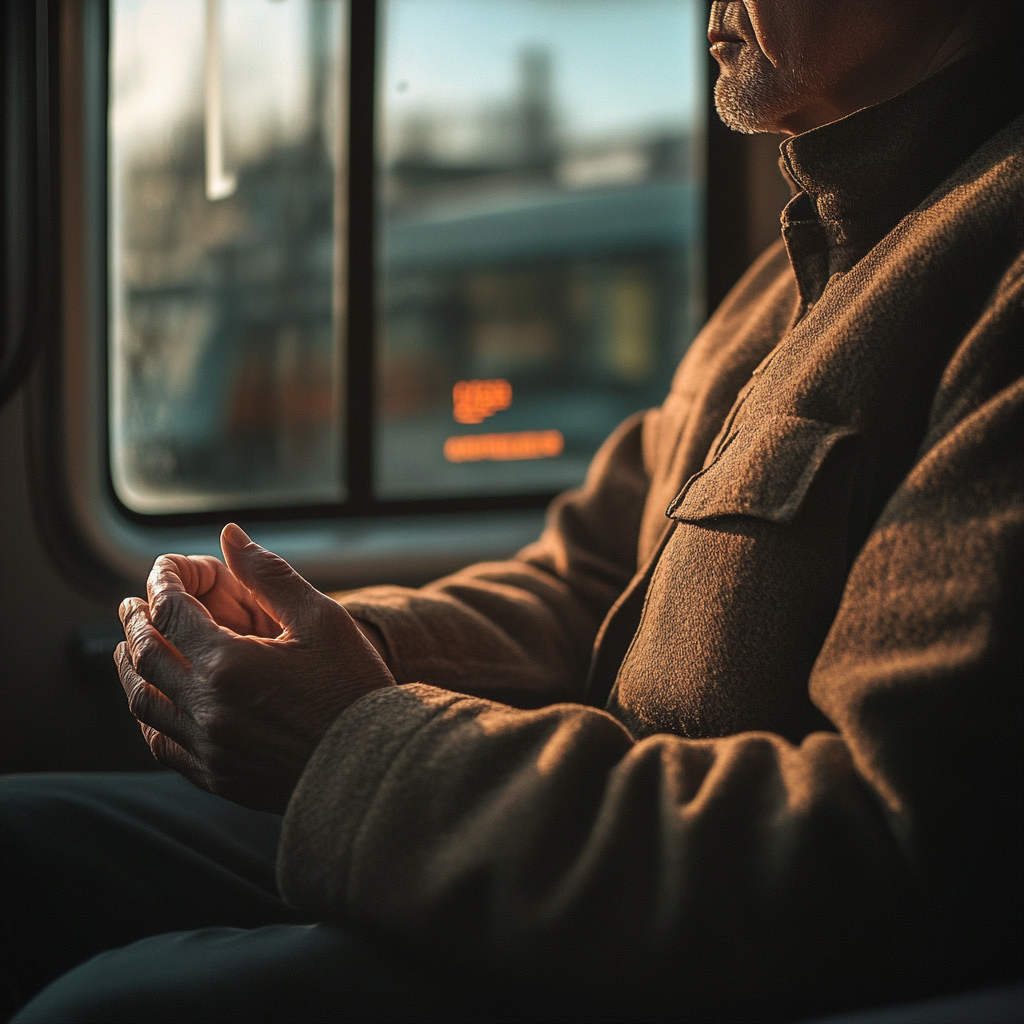
For illustration purposes only. | Source: Midjourney
My actions started subtly. I’d make sure my daughter’s favorite snacks were always in the pantry, visible, accessible. The other one’s snacks? Tucked away, out of sight. I’d plan weekend outings tailored specifically to my daughter’s interests, knowing the other one would probably find them boring. It’s for her stability, I’d tell myself. She needs to know she’s still priority.
When it came to shared spaces, I became a silent enforcer. The living room TV was always on my daughter’s preferred channel. Her artwork went on the fridge, while the other one’s drawings somehow always ended up in a neat pile on the kitchen counter, easily overlooked. She needs to feel seen, I justified. She needs to feel cherished.
Then came the room situation. The other one’s room was smaller, true. It faced the back, overlooking the alley. My daughter’s room faced the front, with a view of our beautiful old oak tree. The other one once tentatively asked, “Could I maybe have a window that looks at a tree?”
My heart did a tiny clench. It’s just a tree, a small voice inside me argued.

For illustration purposes only. | Source: Midjourney
But then I looked at my daughter, across the dinner table, her small face already burdened. I saw the look of mild panic that crossed her features.
“No,” I said, my voice firm, perhaps a little too firm. “This is your room, sweetheart. Your special space. And the other one’s room is just fine for them.”
I saw the other one’s shoulders slump. I saw their eyes cloud over. My partner, sitting beside them, gave me a look that was hard to decipher. Disappointment? Sadness? I ignored it. My daughter’s happiness was paramount.
I started building walls. Invisible ones. I’d pull my daughter close, hug her tight, whisper secrets and inside jokes, making sure the other one saw. I created a fortress around my child, protecting her emotional space, her physical space, her right to simply be without feeling encroached upon. This is what a good mother does, I convinced myself. She defends her cub.

For illustration purposes only. | Source: Midjourney
The other one became quieter. Their eager attempts to connect faded into polite, distant nods. They spent more and more time alone in their small room, the one with the alley view. Sometimes, late at night, I’d hear muffled sounds coming from there. Not crying, exactly. More like… loneliness. A deep, cavernous ache. Guilt would prick at me then, sharp and sudden. But my daughter is smiling more, I’d remind myself. She’s thriving again. It’s a sacrifice. For the family. For her.
My partner and I grew distant. Our easy laughter became strained, replaced by silences, by unspoken resentments. He tried to talk to me once. “They’re just kids,” he’d said, his voice gentle but laced with a plea. “They just want to belong.”
“My daughter does belong,” I’d retorted, my voice sharp. “This is her home. This is her family. And I won’t let anyone make her feel otherwise.”
He just sighed, a sound that cut through me more deeply than any argument. He stopped trying after that. He just watched. Watched me, watched his child, watched our family crumble around a core of my making.

For illustration purposes only. | Source: Midjourney
Months turned into a year. My daughter was back to her old self, confident, happy. The other one was almost a ghost in the house. Polite, yes. Accommodating, always. But completely removed. Their eyes, once so full of light, now held a perpetual sadness, an unaddressed yearning. I barely looked at them anymore, afraid of what I might see, afraid of the guilt that would surely rise up and choke me.
Then, one evening, my partner found me in the kitchen. He held a small, crumpled envelope in his hand. His face was pale, his eyes red-rimmed.
“I have to tell you something,” he said, his voice barely a whisper. “Something I should have told you years ago. But I was so scared. So full of hope that you would just… know.”
My heart hammered. What now? Had he been cheating? Is this the end?
He unfolded the letter, pushed it into my trembling hands. It was an old document, faded, official-looking. An adoption notice.

For illustration purposes only. | Source: Midjourney
My vision blurred. I scanned the words, my breath catching in my throat. Dates. Names. My name. My signature.
The baby I gave up for adoption.
The baby I’d held for a fleeting moment, out of desperate, youthful fear, then relinquished to a closed adoption agency, begging them to find a loving home, promising myself I’d never look back.
My eyes darted to the name of the child. It was… the other one’s name. The child in my home.
I looked up at him, my partner. His face was a mask of grief and apology.
“When I met you,” he explained, his voice thick with tears, “and you told me you’d had a child you gave up… and then I saw them… and I knew the age, the year. I knew the name of the woman who adopted them, through a mutual acquaintance. I knew.”
He paused, taking a shaky breath. “I searched for them, for a long time. They were my friend’s child, someone I knew from years ago, after she passed away. And when I found them, I realized… they were yours. I saw so much of you in them. I wanted to bring them home. I wanted to give you both a second chance. I thought… I thought you’d know. Or that, even if you didn’t, you would love them anyway. I just wanted them to have a mother. And for you to have them back.”
For illustration purposes only. | Source: Midjourney
My hands started shaking violently. The letter fell to the floor.
I had pushed them away.
I had silenced their laughter.
I had denied them a proper room, a proper place, a proper welcome.
I had built walls, not around my daughter to protect her, but around my own heart, to protect myself from the inconvenient truth of my past, from the shame of a child I’d once abandoned.
And in my blind, self-serving “protection” of my other daughter’s “space,” I had, with my own hands, rejected my own flesh and blood not once, but TWICE.
My daughter, my precious, protected daughter, came around the corner, attracted by the rising tension in our voices. She looked at me, then at the crumpled paper, then at the other one, who was now slowly descending the stairs, drawn by the same magnetic pull of tragedy.

For illustration purposes only. | Source: Midjourney
The other one. My child. My beautiful, heartbroken, unwanted child.
And all I could do was stare, the crushing weight of my actions, my choices, my utter, unforgivable failure, threatening to swallow me whole.
I had tried to save a space, but I had obliterated a family.
I had protected my daughter from a phantom threat, and in doing so, I had destroyed the one person who needed me most.
And now, looking into those familiar, sorrowful eyes, eyes that were so devastatingly, undeniably my own, I realized the full, horrifying depth of my irreversible mistake.
There was no going back. There was no apology big enough.
There was only this. This gaping, bleeding wound where my heart used to be.