It was 3:17 p.m. when the headache finally dulled to a low, persistent throb. I had just closed a vicious three-hour negotiation on the Nimik Corp share split—every word a feint, every pause a blade. The conference room still smelled faintly of over-brewed coffee and expensive cologne when I slid into my car in the underground garage.I let my shoulders drop for the first time all day. My briefcase sat beside my personal phone on the passenger seat. I almost closed my eyes.Then the phone buzzed.

An Annoying Man | Source: Midjourney
Julian Carter.
My husband almost never called during work hours unless it was urgent. I answered without much thought.
“Julian?”
A woman’s voice answered—calm, professional, edged with strain.
“Am I speaking with Mrs. Carter?”
Instinct straightened my spine. Seven years as a high-stakes divorce attorney had tuned me to detect trouble in micro-shifts of tone.
“Yes. Who is this?”
“Karen, RN, Emergency Department, Mount Sinai. Your husband Julian Carter was brought in approximately twenty-five minutes ago after a serious motor-vehicle collision. He’s in critical condition. We need a next of kin here immediately to authorize emergency procedures.”
The garage lights smeared across the windshield. Critical condition. The phrase landed like a brick through glass.
I don’t remember most of the drive. Forty minutes became nineteen. I arrived at the trauma entrance breathing hard, heels striking tile like gunshots.
The nurse at the desk directed me down the corridor toward the trauma bays. Halfway there another nurse—clipboard in hand, pale-blue mask—stepped into my path.
“I’m sorry. Restricted area beyond this point.”

Portrait of a sad woman with her eyes closed | Source: Midjourney
“I’m here for Julian Carter,” I said, keeping my voice level. “The hospital called me. I’m his wife.”
A tiny hesitation. Her eyes flicked to the clipboard, then back to the double doors, then to me.
“That’s… odd,” she said slowly.
“Why?”
“Because his wife and son are already inside with him.”
The sentence arrived like blunt-force trauma to the base of my skull.
Seven years married. No children. Never discussed children seriously because neither of us had ever felt the timing was right. We had joint accounts, a shared mortgage, holiday photos with his parents, polite monthly transfers to them. We did not have a son.
I stood motionless while antiseptic and distant alarms filled the silence.
“Excuse me,” I eventually said—voice eerily even. “I need to see something.”
I stepped around her and walked to the swinging doors. Through the small reinforced window I saw the tableau that would burn itself permanently into my retinas.
Julian lay in the bed, head swathed in gauze, oxygen mask fogged with each shallow breath. The monitor beeped steadily—alive, for now.
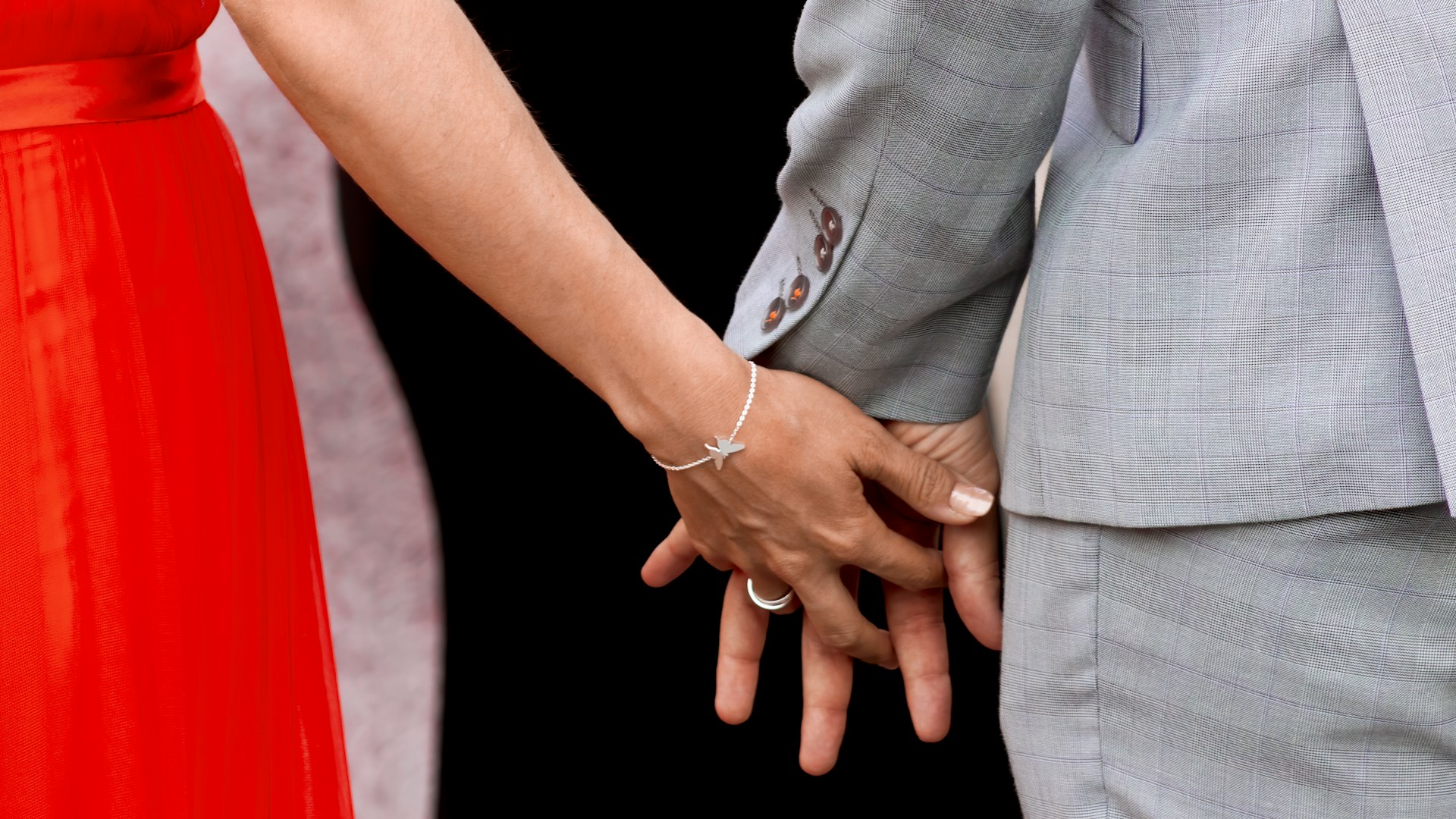
A couple holding hands | Source: Unsplash
Beside him sat a woman, mid-twenties, cream cashmere sweater, tear-streaked but composed. Her left arm curled protectively around a boy of perhaps three who clutched a small plastic robot and stared at the man in the bed, whispering “Daddy” over and over.
Julian’s parents—people who complained constantly about arthritis when they visited—stood flanking the pair like sentinels. My mother-in-law rubbed slow circles on the young woman’s back with the casual intimacy one reserves for a daughter.
A perfect nuclear-family portrait. Five people bound by blood and lies.
I felt no explosion of rage. Only a cold, surgical clarity.
The old version of me—the one fresh out of law school—might have stormed in, screaming. The current version, senior partner specializing in ultra-high-net-worth dissolutions, understood that impulse was suicide. An outburst now would alert them, destroy the element of surprise, and potentially hand them ammunition for the inevitable court battle.
I released the door handle. My nails had carved crescents into my palms.
I walked to the fire stairwell. The motion-sensor light was out; only the green exit sign glowed. I lit a cigarette—hospital rules be damned—and inhaled until my thoughts sharpened.
Then I called Frank, ex-NYPD detective turned private investigator.
“Maya. This hour? Must be juicy.”
“I need everything on the woman and child currently at Julian Carter’s bedside in Mount Sinai trauma. Photograph coming. Full work-up—address, finances, timeline with Julian. Most importantly: obtain a biological sample from the boy. Rush DNA. I want results by midnight.”
A short pause. Frank was sharp; he heard the ice under my calm.

Aerial view of a beach | Source: Midjourney
“Copy. Sending you a secure drop for the photo. Anything else?”
“Keep eyes on Julian if he wakes. But discreetly.”
I stubbed the cigarette against the concrete wall.
From that moment Julian Carter ceased to be my husband.
He became the defendant.
The next morning he regained consciousness.
By then I had already moved.
When I walked into his room that afternoon, his parents and the woman (Lily, I would later confirm) had stepped out briefly. Julian’s eyes widened when he saw me—shock, guilt, then a forced smile that pulled at his sutures.
“Maya… you came.”
“Of course I came.” I stepped close, eyes filling with perfectly timed tears. “You terrified me.”
I took his hand—the same hand Lily had held hours earlier—and felt his palm slick with sudden sweat.
I played the devastated wife flawlessly: trembling voice, gentle touches, endless questions about his pain, the doctors, his prognosis.
His body slowly relaxed. He thought he was safe.
While I tucked his blanket I slipped a micro-tracker (audio + GPS) into the seam beneath his pillow.
While fetching water I casually asked about the accident report and dash-cam footage.
He hesitated, glanced at his phone.
I mentioned insurance, stock price, the ongoing funding round, reputational risk.
Business instincts overrode caution. He handed me the SD card.
In my car thirty minutes later I played the audio.
Lily’s voice first—sweet, proprietary: “Our boy’s teacher says he’s reading already. So smart.”
Julian, smug: “Of course. Look who his father is. A hell of an upgrade from the ice queen at home.”
Then promises: West Village townhouse as a birthday gift for “our boy,” assurances that I would never suspect, that I was too busy, too blind, too barren.
The crash came seconds later.
I closed the laptop.
No tears. Only scorched resolve.
The rest unfolded with mechanical precision.
Power of attorney signed under guise of protecting the company during his craniotomy.
Supplemental marital property agreement quietly transferring high-risk debt to him personally while shielding “family” assets in my name.
Financial reports (doctored by a loyal CFO) showing sudden catastrophic losses.
Downgrade from VIP suite to three-bed ward.
Creditor harassment theater outside the office.
A demand letter for a $1 million “joint debt” backed by an old blank promissory note he’d signed years ago.
Lily signing the nominee-shareholder agreement that made her personally liable for every dollar of new debt the company incurred.
Contracts deliberately structured to hemorrhage money into shell entities I controlled.
The final act: a fabricated taunt about the unborn child’s paternity that detonated their relationship and triggered Julian’s fatal aneurysm.
When the second bleed came, success rate <30%, costs astronomical, I presented the family with the medical-proxy transfer.
They chose palliative care.
Twenty-four hours later the monitor flatlined.
I arranged immediate cremation.
Seven days later, in my conference room, I presented the heirs with the inheritance:
$38 million in debt.
Lily—nominee shareholder—personally liable for the corporate portion.
My in-laws jointly liable for the personal loan.
The West Village townhouse, the Porsche, every gift—recovered as fraudulent transfers of marital assets.
Lily miscarried under the pressure.
My in-laws lost their home.
I absorbed the viable pieces of Julian’s company into a new entity under my sole control.
Then I sold our house, moved downtown, started painting again, planted jasmine on the balcony.
And one morning I opened the Carter Foundation—free legal representation for women trapped in financially or emotionally abusive marriages.
The first client who walked through my door had tired eyes and a story that echoed mine in painful ways.
I handed her warm tea and said the words I once needed to hear:
“You are not alone. From now on, I am your lawyer.”
Outside, sunlight poured through the blinds.
For the first time in years I felt something close to peace.
Not because I had destroyed them.
But because I had finally stopped letting anyone destroy me…